
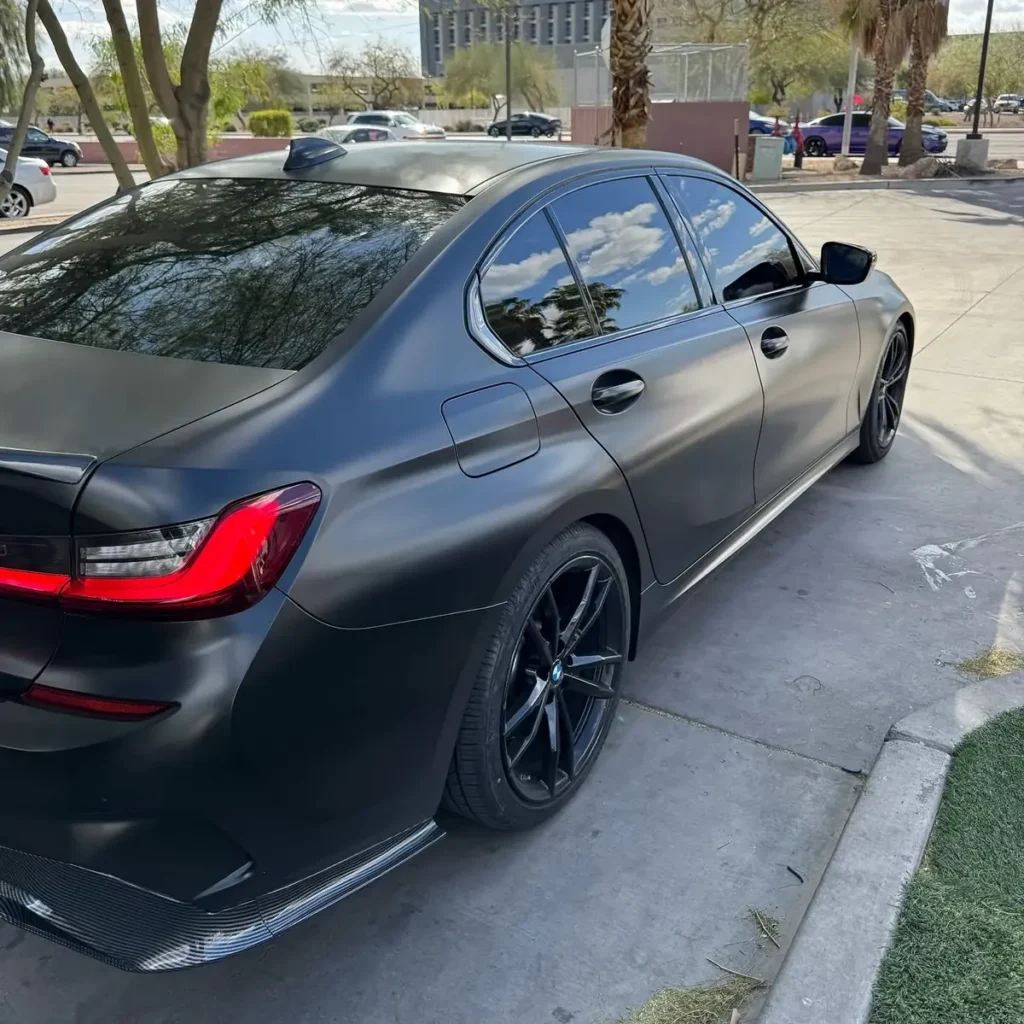
Ceramic vs. carbon window tint is a real question for Phoenix drivers, because summer sun here is relentless. The National Weather Service counted 37 days at or above 110°F in Phoenix in 2025. Arizona law also limits how dark front windows can go, so the film has to do more of the work.
At Apex Autowerks in Phoenix, AZ, drivers ask which film cools a car better. Many also want to know what the extra cost buys beyond comfort. This guide compares both films on heat, UV, signals, appearance, cost, and Arizona tint rules.
Table of Contents
- Which Is Better for Phoenix Heat, Ceramic or Carbon Window Tint?
- How Are Ceramic and Carbon Tint Built Differently?
- How Hot Does Phoenix Get, and Why Does Film Choice Matter?
- How Should Drivers Compare Heat Numbers on a Tint Film?
- What Does Arizona Law Allow on Each Window?
- Does a Lighter Ceramic Beat a Darker Carbon?
- Will Ceramic or Carbon Tint Block Phone and GPS Signals?
- How Do the Films Look by Day and at Night?
- Does Carbon Tint Fade or Turn Purple in Arizona Sun?
- How Do Ceramic and Carbon Tint Compare on Cost?
- Ceramic vs. Carbon Tint at a Glance
- Which Vehicles Benefit Most From Ceramic Tint?
- What Should Drivers Ask Before Choosing a Film?
- How Should Fresh Tint Be Cared For?
- Final Thoughts on Ceramic vs. Carbon Window Tint in Phoenix
- Frequently Asked Questions
Which Is Better for Phoenix Heat, Ceramic or Carbon Window Tint?
Ceramic is the stronger choice for heat control, while carbon is the stronger choice for drivers watching the budget. Both films avoid metal, both hold color better than dyed film, and both are commonly rated near 99% UV rejection.
The real separation is infrared rejection and price. Drivers can compare both options through window tinting in Phoenix, AZ and request quotes on the same vehicle.
How Are Ceramic and Carbon Tint Built Differently?
Carbon film embeds carbon particles in its layers to block infrared light, which gives it a flat, matte finish. Ceramic film uses non-metallic ceramic particles for the same job, and it tends to look clearer from inside.
Apex Autowerks offers carbon and ceramic packages for the front two windows, rear sides, full car, and windshield visor strip. Drivers should ask which film line each quote uses, because performance varies by product and shade.
How Hot Does Phoenix Get, and Why Does Film Choice Matter?
Phoenix also logged 122 days at or above 100°F in 2025, with a high of 118°F. Those figures come from the National Weather Service climate summary for the year.
Parked cabins hold that heat for hours, so seats and steering wheels stay uncomfortable long after the engine stops. Film cannot cool a car like air conditioning, but it reduces the solar energy entering through the glass. That reduction is where ceramic and carbon differ most.
How Should Drivers Compare Heat Numbers on a Tint Film?
Infrared rejection shows how much infrared light a film blocks, and it is the first number to compare. Total solar energy rejected, known as TSER, combines infrared, visible light, and UV into one figure.
SHGC, the solar heat gain coefficient, measures solar energy passing through the glass, and a lower number means less heat. Every figure belongs to one film at one shade, so numbers from different shades should not be compared.
Apex Autowerks has spent 3 years installing film for drivers across Phoenix, Goodyear, Avondale, Laveen, and Buckeye. Its pages advise asking for the data sheet of any film before choosing.
What Does Arizona Law Allow on Each Window?
Arizona’s statute on vehicle window tint sets front side window film at 33% light transmission, plus or minus 3%. The rule measures light, not material, so carbon and ceramic follow the same limit.
Rear side windows have no darkness minimum, but reflectance must stay at 35%, plus or minus 3%, or lower. A rear window must meet that reflectance limit or have outside mirrors on both sides that show 200 feet behind.
Windshield film is limited to a top strip, and it cannot be red or amber. That strip must sit at least 29 inches above the undepressed driver’s seat. Factory glass already blocks some light, so a meter check after installation confirms the front windows comply.
Does a Lighter Ceramic Beat a Darker Carbon?
Shade and heat rejection are separate specifications. Darker film of the same type usually rejects more heat, so a fair comparison holds the shade constant.
Front windows must stay near 33%, so ceramic tends to matter most there, where darkness cannot compensate. Rear side windows have no darkness minimum, so a darker carbon film can still manage heat on the back glass.
Choosing between carbon and ceramic is simpler with both quotes side by side. Phoenix drivers can call (602) 857-9929 to compare both films for a specific vehicle. Each quote lists the shade, the 33% front window rule, and the lifetime warranty terms.
Will Ceramic or Carbon Tint Block Phone and GPS Signals?
Neither film interferes with signals, because both are non-metallic. Older metallic films could weaken phone, GPS, and satellite radio reception, but carbon and ceramic do not share that problem.
Signal performance should not decide the choice. Heat control, price, and warranty are better tie-breakers.
How Do the Films Look by Day and at Night?
Carbon tends to show a flat, matte finish, and many drivers like that understated look. Ceramic tends to look clearer and more neutral, which some prefer when looking out through the glass.
At night, the shade percentage affects visibility far more than the film type. Two films at the same percentage look similar from outside the vehicle.
Does Carbon Tint Fade or Turn Purple in Arizona Sun?
Dyed film is the type that fades and turns purple, because its dye breaks down under constant sun exposure. Carbon and ceramic hold color better because their heat control does not depend on dye.
A color change in either film is unusual and deserves a warranty review. The shop offers a lifetime warranty, and buyers should get its written terms before installation.
How Do Ceramic and Carbon Tint Compare on Cost?
Ceramic usually costs more than carbon on the same vehicle, because the film itself costs more to produce. Final pricing also depends on vehicle size, window count, and any old film that needs removal.
The Phoenix cost guide on this site lists ranges by vehicle type, which helps set a budget before quotes arrive.
A written quote naming the film line and shade is the fairest comparison. Drivers with garage parking and short trips may find carbon delivers enough comfort for less money.
Ceramic vs. Carbon Tint at a Glance
The table below summarizes how the two films compare on the points that matter most to Phoenix drivers.
| Factor | Carbon | Ceramic |
|---|---|---|
| Infrared heat control | Good | Stronger |
| UV rejection | Commonly near 99% | Commonly near 99% |
| Signal interference | None, non-metallic | None, non-metallic |
| Appearance | Flat, matte | Clearer, more neutral |
| Cost | Lower | Higher |
| Arizona front window rule | 33% light transmission, plus or minus 3% | 33% light transmission, plus or minus 3% |
| Best suited to | Garage parking, short trips, rear glass | Outdoor parking, long commutes, front glass |
Heat control and cost are the two rows where the films truly separate.
Which Vehicles Benefit Most From Ceramic Tint?
Vehicles with large glass areas, such as SUVs and Tesla models with glass roofs, let in more sun. Infrared control therefore matters more on those vehicles.
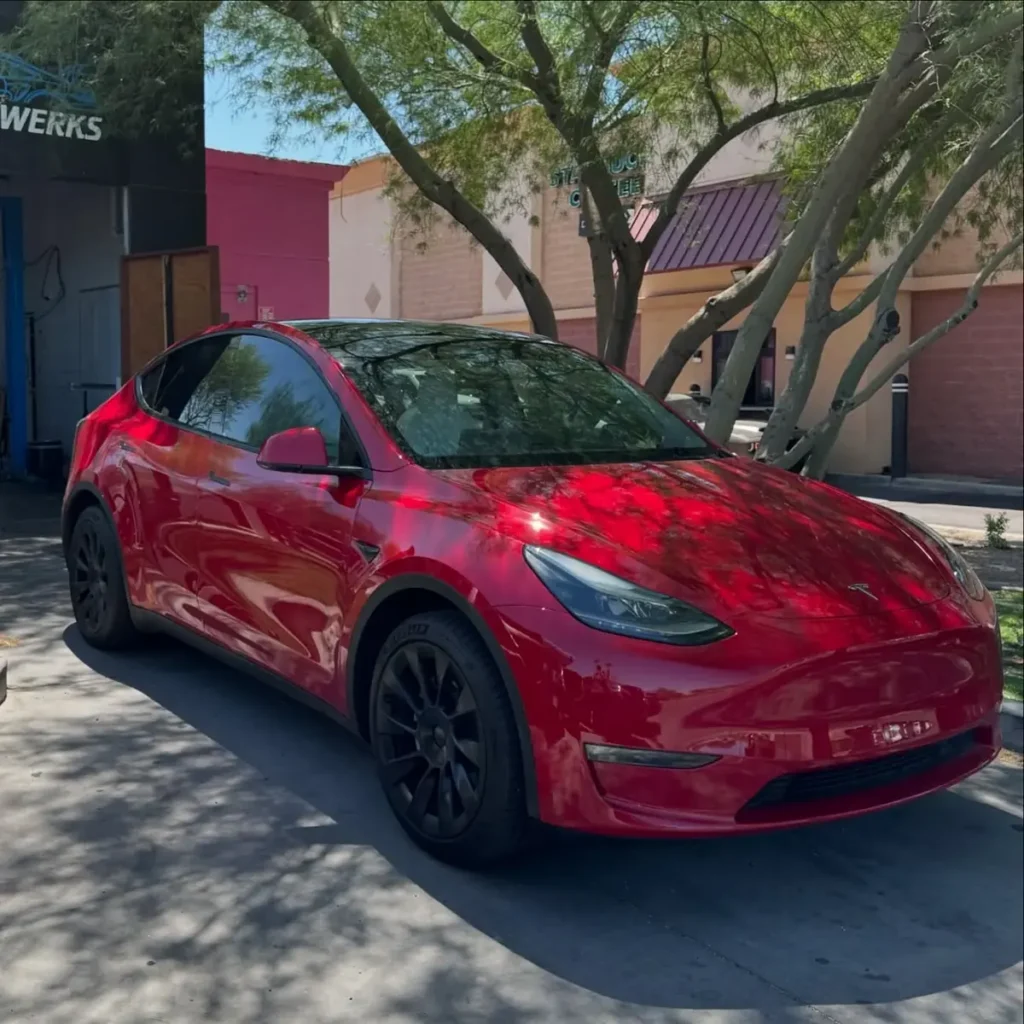
Drivers who park outdoors at work, commute across the West Valley, or own dark interiors also gain the most. Short trips with garage parking gain less from the upgrade.
What Should Drivers Ask Before Choosing a Film?
Buyers should ask for the exact film line, the shade, and the published UV, infrared, and TSER numbers. A quote that names only a film type leaves room for substitution.
They should also ask what the lifetime warranty covers and who backs it. Coverage that exists only in conversation is hard to use later.
A shop that names the film, shows the data sheet, and writes the shade on the quote answers most concerns.
How Should Fresh Tint Be Cared For?
Cure time varies by film and weather, so windows should stay up until the installer says they can move. Rolling a window down too early can lift an edge of the film.
Both films should be cleaned with a mild, ammonia-free cleaner and a soft cloth. Abrasive materials and harsh chemicals can damage either film.
Final Thoughts on Ceramic vs. Carbon Window Tint in Phoenix
Ceramic delivers stronger infrared control and a clearer look, while carbon costs less and holds color. Both beat dyed film, both follow the same Arizona rules, and both are signal safe. Parking habits, commute length, and budget decide the winner.
Drivers who want exact numbers can read what window tinting costs in Phoenix before booking. Apex Autowerks serves Phoenix, Goodyear, Avondale, Laveen, and Buckeye, and will compare both films on any vehicle.
Choosing the right film starts with a written quote for the actual vehicle. Apex Autowerks will price carbon and ceramic side by side and confirm the shade and warranty terms before work begins. Call (602) 857-9929 to schedule a tint consultation in Phoenix.
Frequently Asked Questions
Ceramic generally rejects more infrared heat than carbon at a similar shade, so it usually keeps a parked car cooler in Phoenix summers. Both films block most UV. Compare TSER and infrared numbers on each data sheet at the same shade, since claims without a named film mean little.
Arizona’s statute sets front side window film at 33% light transmission, plus or minus 3%, for carbon and ceramic alike. Factory glass lowers the final reading, so a meter check after installation confirms the windows comply. Confirm the shade with the installer before work starts.
Neither film blocks signals, because both are non-metallic. Older metallic films could weaken phone, GPS, and satellite radio reception, but carbon and ceramic do not. Signal performance should not decide between them, so heat control, cost, and warranty are better tie-breakers for most drivers.
Fading and purple color change are problems of cheap dyed film, not quality carbon or ceramic. A color change in either film is unusual and should be reviewed under the lifetime warranty. Ask for the warranty terms in writing before installation so coverage is clear from day one.
Arizona sets no light transmission minimum for rear side windows, so darker carbon is allowed there. Reflectance must stay at 35%, plus or minus 3%, or lower. A tinted rear window must meet that limit or have two outside mirrors. Confirm any rear shade with the installer before booking.
Ceramic suits outdoor parking, long commutes, and dark interiors, because it rejects more infrared heat. Carbon suits garage-kept vehicles and shorter trips at a lower price. Both beat dyed film, so the better choice depends on parking habits and budget rather than one film being wrong.